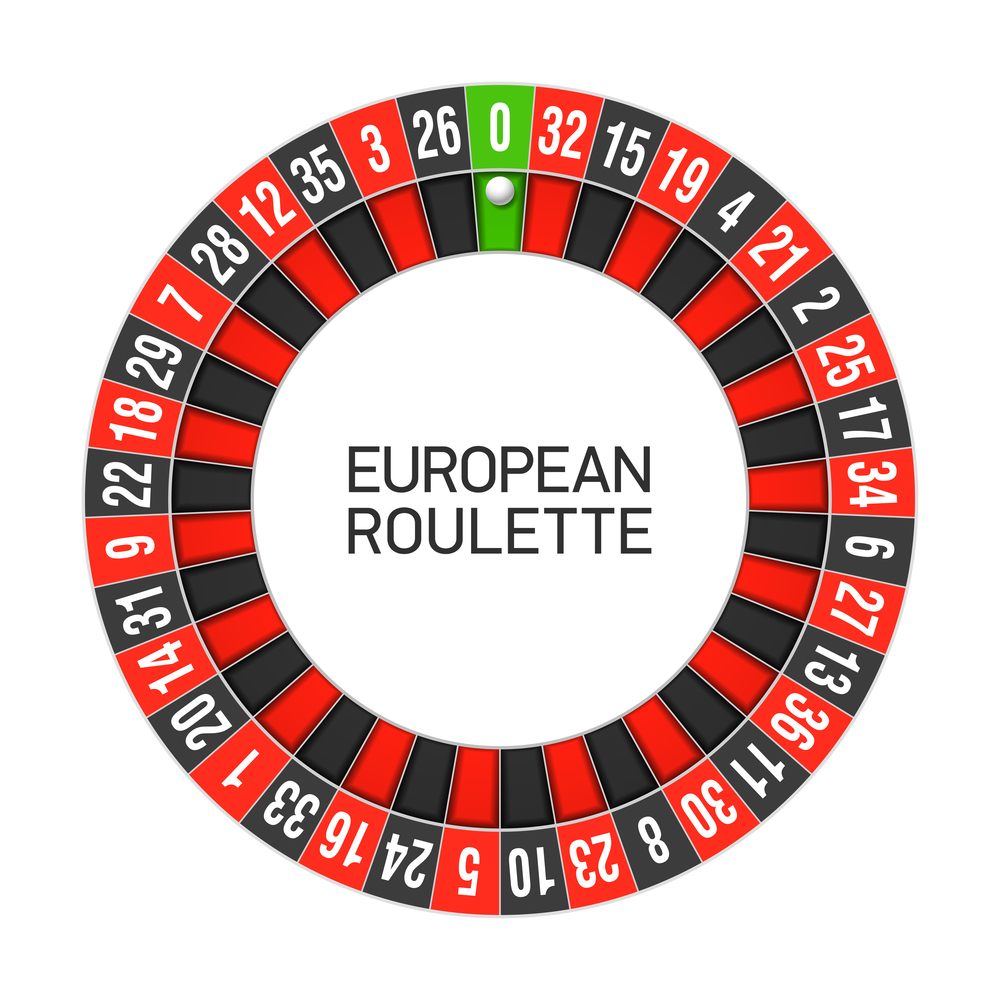
Who Invented Roulette?
The story most often told is that roulette began with Blaise Pascal, the 17th-century French mathematician. While searching for a perpetual motion machine, Pascal experimented with a spinning wheel – and that “little wheel” (roulette in French) is said to be the ancestor of the casino game. Historians point out that the modern game also drew on older wheel and board games such as Roly-Poly, Even-Odd and the Italian game Biribi, and roulette in its recognisable form appeared in Paris in the late 18th century.
Blaise Pascal: Child Prodigy and Inventor
Pascal was born on 19 June 1623 in Clermont-Ferrand, France, the only son of Étienne and Antoinette Pascal. His mother died when he was three, and he was educated at home by his father, a tax official and a talented mathematician who quickly recognised his son’s gift for mathematics and science.
As a teenager, Pascal set out to make his father’s tax calculations easier. After years of work and around fifty prototypes, he built a mechanical calculator – the Pascaline – making him one of the first inventors of a working calculating machine. It was expensive and complicated to produce, so few were sold, but it secured his reputation.
Pascal, Fermat and the Birth of Probability
In 1654 Pascal began a famous exchange of letters with fellow mathematician Pierre de Fermat about how to divide the stakes fairly in an unfinished game of chance. Their correspondence laid the foundations of probability theory – the mathematics that showed how the outcomes of random events can be measured and predicted over many trials. Every roulette payout and house edge today is calculated with the principles they developed.
Later Life and Legacy
Pascal suffered from poor health for most of his life. He died in Paris on 19 August 1662, aged just 39, and was buried in the church of Saint-Étienne-du-Mont. His work shaped geometry, physics, probability and the early history of computing – the programming language Pascal and the SI unit of pressure are both named after him.
From Paris to Monte Carlo – and Online
- Late 1700s: roulette is played in the gaming houses of Paris with both a single and a double zero.
- 1843: François and Louis Blanc introduce a single-zero wheel in Bad Homburg, Germany, to attract players with better odds.
- 1860s: the Blanc family brings single-zero roulette to Monte Carlo, where it becomes the casino’s most famous game.
- 19th century USA: American casinos keep the double zero, creating today’s American roulette.
- 2000s onwards: live dealer studios stream real wheels online – today you can play live roulette from Ireland at any hour.
A Few Words from Pascal
- “I have made this letter longer than usual because I lack the time to make it shorter.”
- “Kind words do not cost much. Yet they accomplish much.”
And the most quoted line at any roulette table – “No more bets, please” – isn’t Pascal’s at all, but it seems a fitting way to end.